
Why are woods called woods? A short history of golf clubs
My driver is titanium and carbon, yet it is called a wood. Here is why: golf clubs from hickory and persimmon to steel, graphite and titanium.
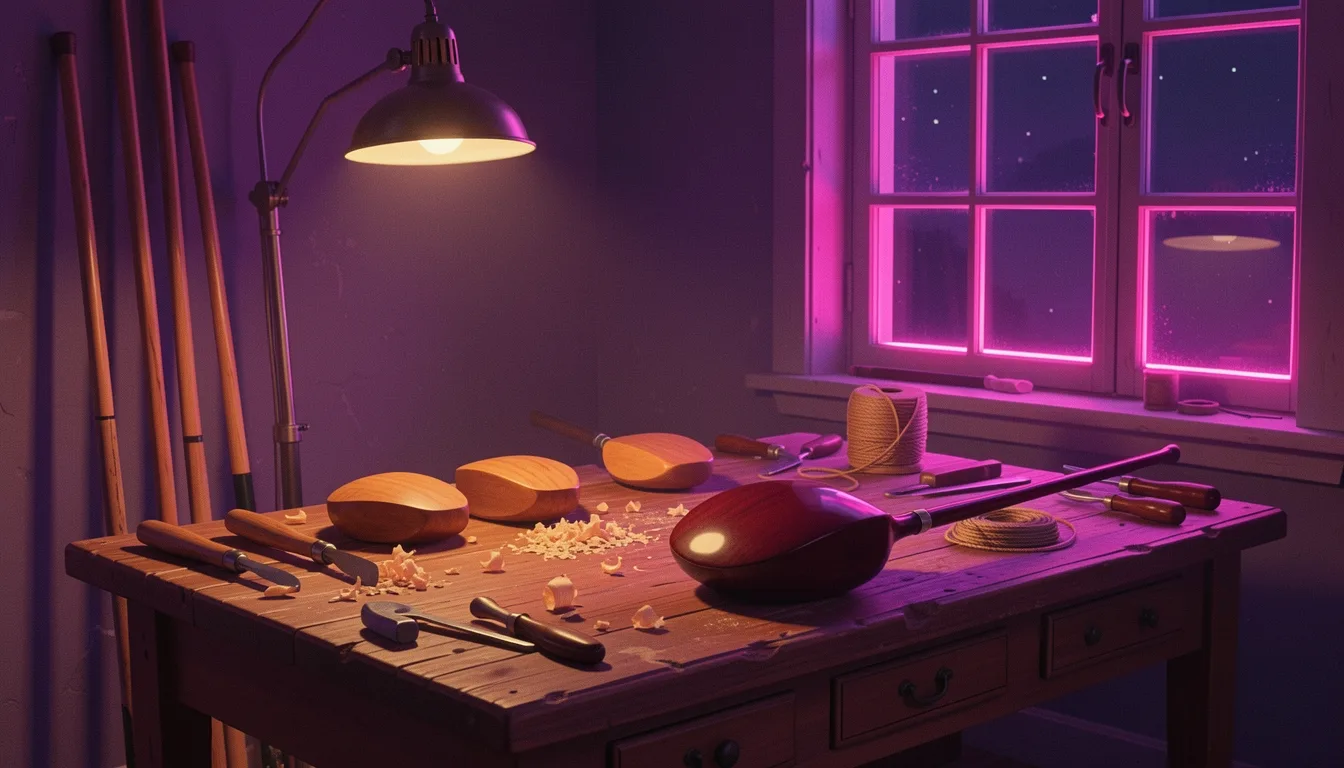
Why the hell are they called woods?
When I started digging into the huge variety of golf clubs, trying to figure out what each one is for, the first thing that caught my attention was the name woods. My driver and fairway woods are clearly made of titanium and carbon fiber, on graphite shafts. There is not a gram of wood in them. So why are they called woods? With irons it seemed obvious: at least they look like they are made of iron.
Then I dug into the history of clubs, and it all made sense. Finding out what clubs used to be made of turned out to be really interesting. The biggest surprise for me was persimmon. I knew persimmon only as a fruit, and I always assumed it grew on some kind of bush. I never thought it grew on a tree at all, let alone a tree hard enough to make golf clubs from.
Here is the short story of how golf clubs went from carved sticks to titanium, and why the old names stuck.
Clubs made by bowmakers
For the first few hundred years, every club was handmade by local craftsmen. In 1502, the royal accounts show King James IV of Scotland buying golf clubs from a bowmaker in Perth. That makes sense: bowmakers already knew how to pick and shape wood that bends without breaking.
A club of that era had two parts:
- The head was carved from a block of hard, dense wood such as beech, thorn, apple or pear. It was long, narrow and shallow, which is why these clubs are now called long-nose clubs.
- The shaft was ash or hazel, and later hickory, imported from North America. Hickory is tough and springy, and it stayed the shaft wood of choice for about a hundred years.
The head and shaft were joined with a scare: both ends were cut at a long angle, glued together and wrapped tightly with tarred twine. It looks fragile, and it was. A player who had a bad day could go through a few clubs.
Iron clubs existed, but only a few. They were made by blacksmiths and used to dig the ball out of ruts, stones and cart tracks. Nobody used them for regular shots for a simple reason: the ball. The leather-and-feathers featherie cost a fortune and would split if you hit it with a piece of iron. So for centuries, golf was a game of wooden clubs. Woods were called woods because they were wood, and they were nearly the only clubs in the bag.
Spoons, brassies and niblicks
For most of golf's history, clubs didn't have numbers. They had names, and each had its own job:
| Old name | Made of | Roughly today | Where the name came from |
|---|---|---|---|
| Play club | Wood | Driver | The club you started each hole with |
| Brassie | Wood | 2 wood | A brass plate on the sole protected it from stony ground |
| Spoon | Wood | 3 wood | A lofted, slightly hollowed face, like a spoon |
| Baffy | Wood | 4–5 wood | From "baff", to hit the ground just behind the ball to pop it up |
| Cleek | Iron | 1–2 iron | Scots for "hook". A thin, flat blade for long, low shots |
| Mashie | Iron | 5 iron | Probably from the French massue, "club". The go-to approach iron |
| Mashie niblick | Iron | 7 iron | A cross between the two, for shorter approaches |
| Niblick | Iron | 9 iron | From "nib", a little nose: a small, heavy head for bunkers and bad lies |
The "roughly today" column is how the names mapped when numbered sets took over, and every maker had its own lofts. If you compare lofts instead, everything shifts by a club or two: old clubs were much weaker lofted, and modern irons keep getting stronger. A 1930s mashie, the "5 iron", had about the loft of a modern 7 or 8 iron. But I love these names. "Hit a mashie niblick" sounds a lot more fun than "hit a 7 iron."
The gutty breaks the long nose
In 1848 the gutta-percha ball, the gutty, replaced the featherie. It was cheap and hard, and that changed everything:
- The long-nose heads started cracking. A slim beech head was fine against soft leather but broke against a hard gutty. Clubmakers made heads shorter, deeper and rounder, and they moved to tougher woods.
- Irons took over. You could finally hit the ball with metal without destroying it. Iron clubs took over more and more shots, especially approach shots to the green.
- Clubs started being mass-produced. By the 1890s the spliced scare was giving way to a socket, a hole drilled in the head for the shaft, which was quicker to make in a factory.
Persimmon: yes, it's a tree
By around 1900, clubmakers had found the wood that would define golf for the next 80 years: persimmon, imported from the United States.
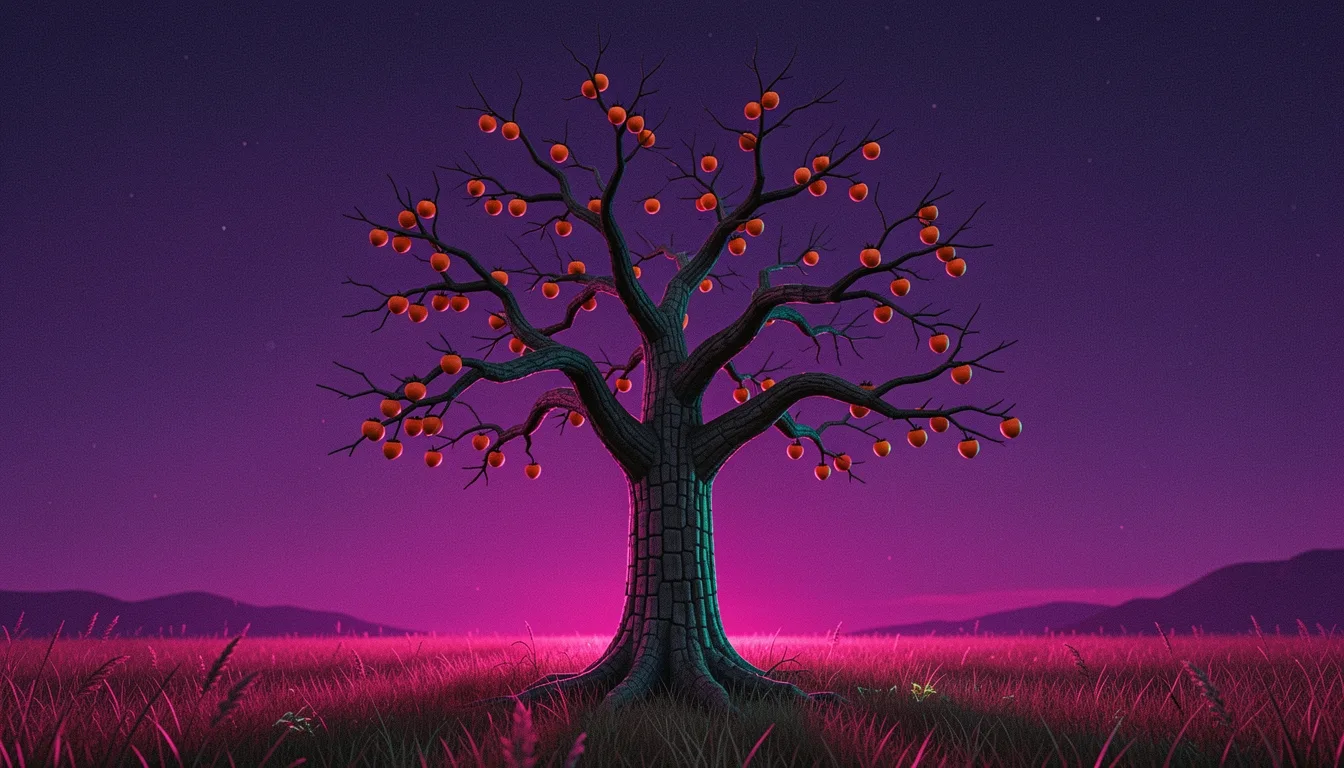
Here is what I learned about the fruit I thought grew on a bush:
- It's a real tree. The American persimmon grows to about 30–60 feet tall, sometimes more. It's native to the eastern United States, including Florida, so there's a decent chance one grows somewhere near my local course.
- It's related to ebony. Persimmons belong to the same genus as ebony trees, Diospyros.
- Its wood is extremely hard and shock-resistant. Before golf, its main industrial use was textile shuttles, the pieces of wood that fly back and forth on a loom and get slammed thousands of times a day. If wood can survive that, it can survive a golf ball.
A persimmon wood was turned from a solid block, finished with oil or lacquer, and usually got a face insert and a brass or steel soleplate. Cheaper woods were made of laminated maple: thin layers glued together, which was more stable but less prestigious. Good persimmon was precious. It didn't like rain and could crack if you mistreated it, so golfers kept their woods in head covers.
Persimmon woods were what the best players in the world used, for most of the 20th century. They sound different too: a persimmon driver makes a deep "click" instead of the high "ping" of a modern driver.
Steel shafts and numbered sets
Shafts changed before heads did. Hickory shafts twisted a lot during the swing, so every club behaved a little differently, and good hickory was getting scarce.
Steel shafts were allowed by the USGA in 1924 and by The R&A in 1929. Bobby Jones still won all four major championships of 1930 with hickory, but within a few years almost everyone had switched to steel.
Steel made it possible to build matched sets: clubs with the same feel and evenly spaced lofts and lengths. That's when names gave way to numbers: the mashie became the 5 iron, the niblick the 9 iron. Players started carrying more and more clubs, until the rules capped it at 14 clubs in 1938.
And in 1932, Gene Sarazen won the Open Championship using a club he had made himself: a niblick with extra metal soldered onto the sole, so it would glide through sand instead of digging in. That was the first sand wedge.
Metal woods (yes, really)
In 1979 a small company called TaylorMade released a driver with a hollow stainless steel head. People nicknamed it the "Pittsburgh Persimmon", after the steel city. At first it was a curiosity, but a hollow metal head can move weight to its edges, which makes it much more forgiving on off-center hits than a solid block of wood. By the early 1990s, persimmon had all but disappeared from the pro tours.
Then came the rest of the modern bag:
- 1970s: graphite shafts. Lighter than steel, so you can swing faster. Today almost every driver and fairway wood has one.
- 1960s–70s: cavity-back irons. Karsten Solheim of Ping made irons by casting instead of forging, with the weight moved to the edges of the head. That's the same forgiveness trick as metal woods, and it's why most beginner irons today have a hollow in the back.
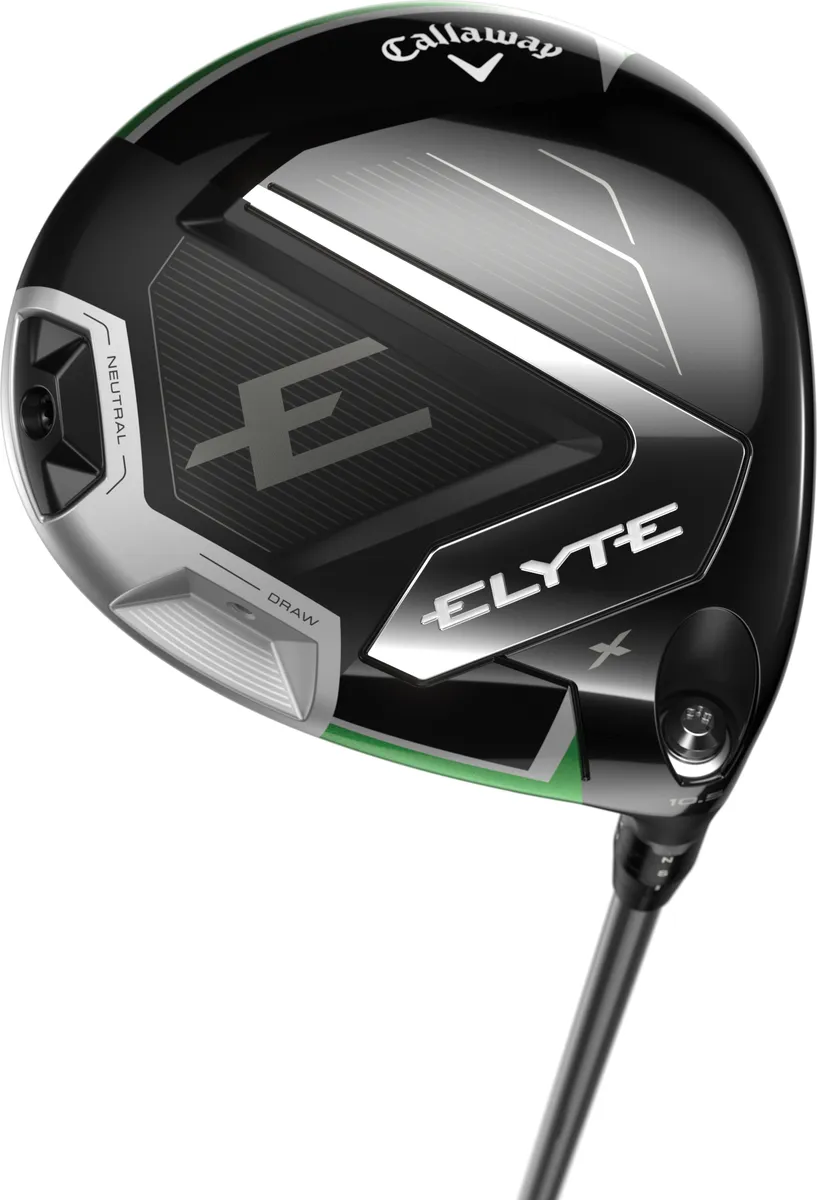
- 1991: the Big Bertha. Callaway's oversized steel driver made big heads mainstream. Titanium arrived soon after: it's light and strong, so heads could get even bigger.
- 2000s: hybrids. A cross between a wood and an iron, easier to hit than long irons. Most beginners now carry at least one instead of a 3 or 4 iron.
Driver heads kept growing until the rules capped them at 460 cubic centimeters in the mid-2000s. That's more than twice the size of a classic persimmon driver head.
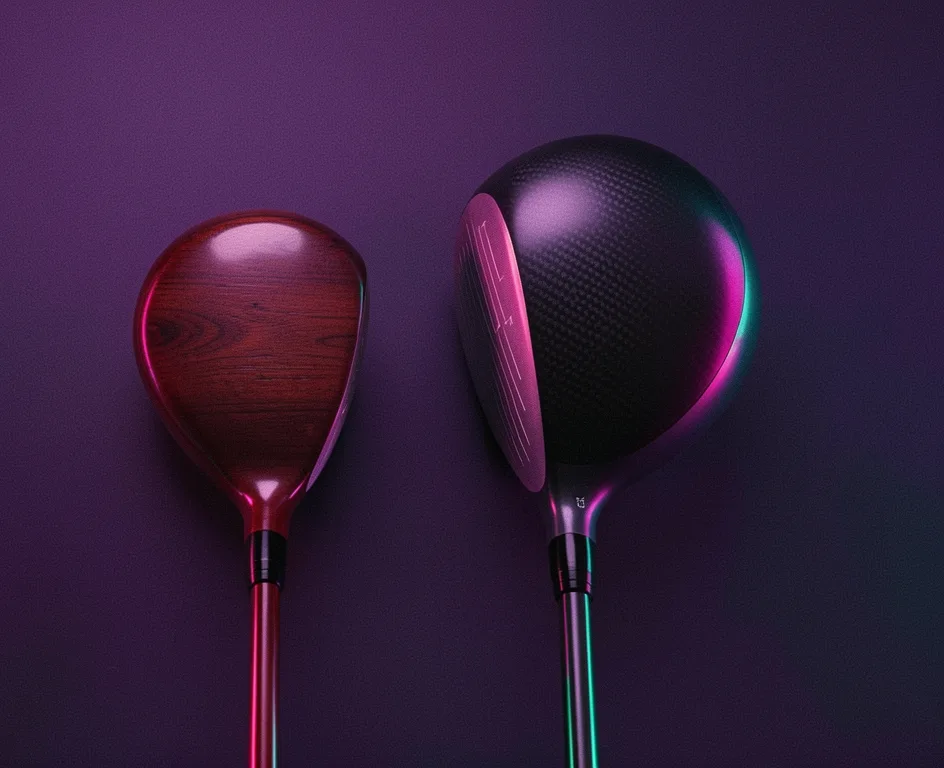
So why are they still called woods?
Because the name was never really about the material. A wood is the club with a big, rounded head that you hit from the tee or sweep off the fairway for distance. That's the job the play club, the brassie and the spoon did 200 years ago, and it's the job my driver does today. The material changed three times; the job never did, so the name stuck.
And here's the twist I didn't expect: irons aren't iron either. Modern irons are steel, usually carbon steel when forged or stainless steel when cast, sometimes with tungsten weights inside. Iron is just the old name, same as wood.
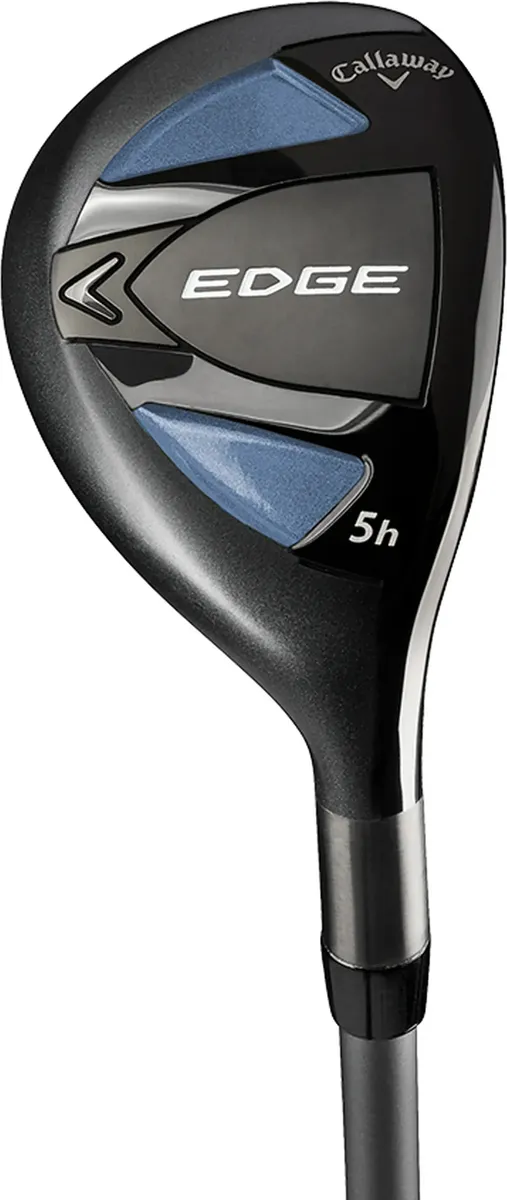
Here are the "woods" in my bag. Neither of them has ever been near a tree:
The rest of my clubs are on my gear page. And if you want the history of the ball and the rules that pushed all these changes, it's in What is golf? A short history from Scotland to Topgolf.