
Golf balls explained: layers, covers and compression
Why one golf ball costs $1 and another $5: a short history, layers, ionomer vs urethane, compression, and what robot tests say about swing speed.
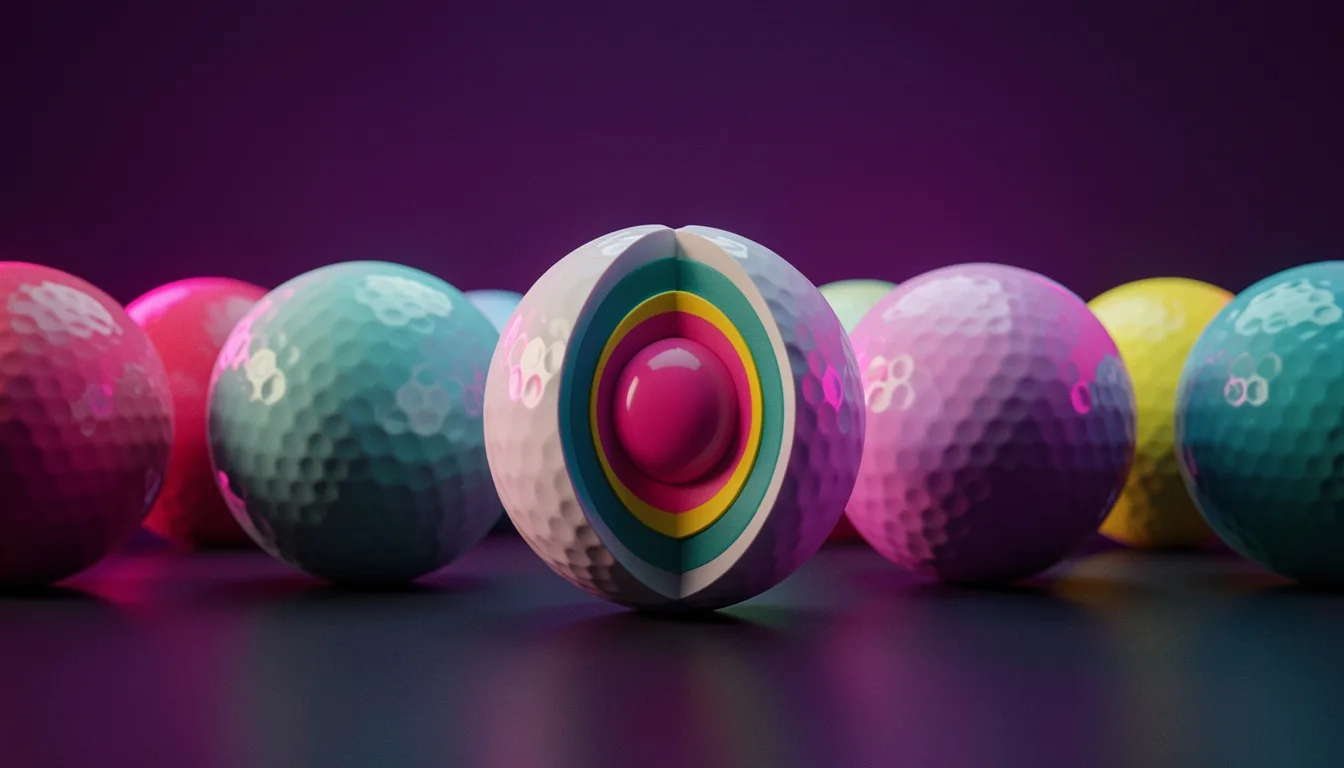
I thought a golf ball was just a golf ball
When I started golf, I was sure the golf ball was standardized in every way: size, weight, look, feel. Like a football or a tennis ball. Same ball, just a different brand printed on it.
Then I went to buy my first box. Some balls cost about $1 each, others $4 or $5 each. What the hell? What's the difference?
I like to research everything I'm new to, so I fell right into it, and the variety of golf balls turned out to be bottomless. There are soft balls and hard balls, depending on compression. There are different cover materials, ionomer and urethane. There are two-piece, three-piece and five-piece balls. Some brands are famous for consistency: every ball in every box flies the same way. With others, balls from the same box can be a little different.
Then come the endless reviews and recommendations. The most common one, and the first one I got: soft, low-compression balls are better for beginners, because a slow swing can't compress a hard ball. So a soft ball flies farther and higher for you, and hard balls are for fast swingers.
I'm now pretty sure that was mostly marketing. Here is what I learned, and what the independent robot tests actually show.
From feathers to rubber threads
The early history of the ball, from the leather featherie to the gutty made of tree sap, is in my short history of golf. Here's what happened next, because it explains the balls we buy today.
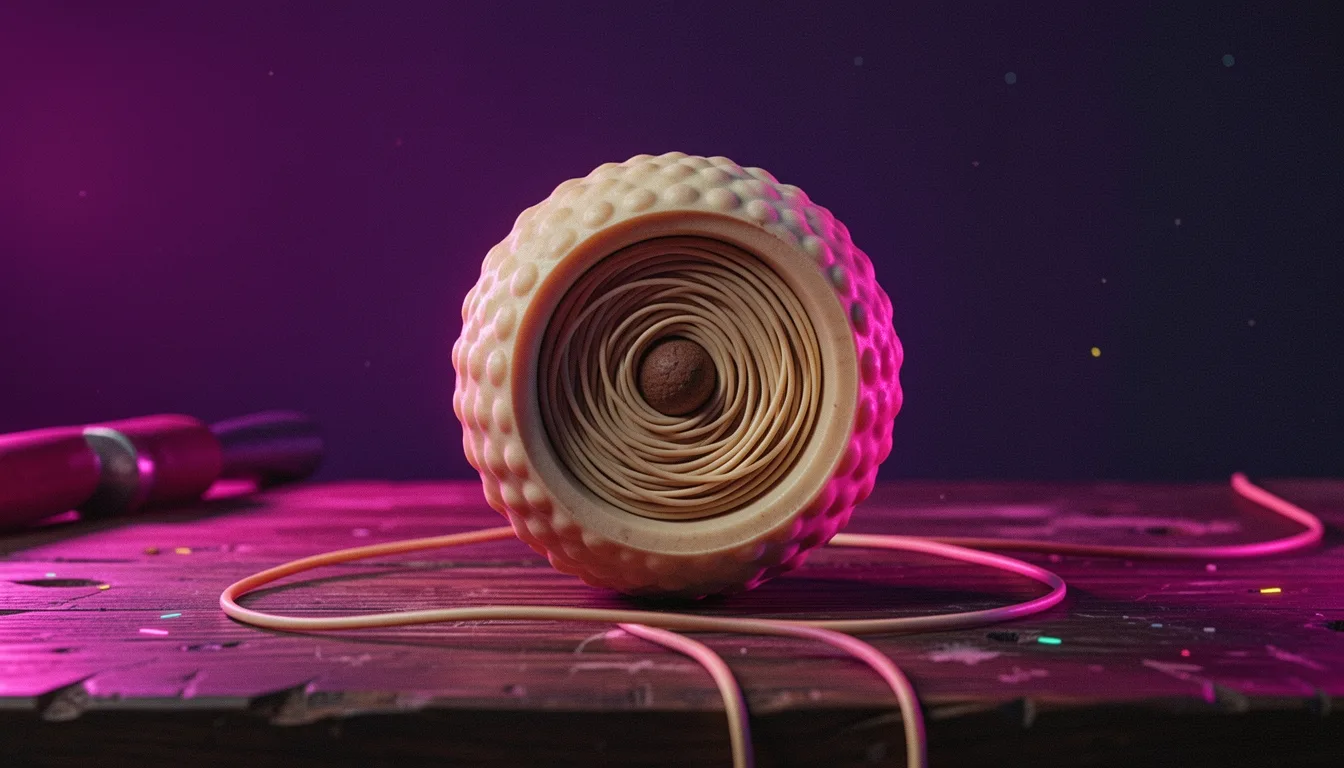
- 1898, the rubber-core ball. An American golfer, Coburn Haskell, visited the B.F. Goodrich rubber factory in Ohio and wound rubber thread into a ball. The plant superintendent, Bertram Work, suggested putting a cover on it. They patented it in 1899. It flew a lot farther than the gutty, and in 1902 Sandy Herd won the Open with one, by a single stroke. After that, nobody wanted a gutty.
- 1905, dimples. Early rubber-core balls were covered in little bumps, the "bramble" pattern. In 1905 William Taylor patented dimples, and the ball has had them ever since.
- Two ball sizes. For decades, Britain played a smaller ball (1.62 inches) than America (1.68 inches). The small ball flew farther in the wind. The R&A only banned it in 1990.
- 1971, the two-piece ball. In the 1960s DuPont came up with Surlyn, a tough plastic cover that didn't cut like the old balata ones. In 1971 Spalding's Top-Flite paired it with a solid rubber core. That's the ancestor of the cheap, durable ball most beginners play now.
- 2000, the Pro V1. For a century, the best players used wound balls: a core wrapped in rubber thread, like the Haskell. On October 11, 2000, Titleist put a new ball on tour in Las Vegas: a solid core, an extra layer around it and a thin urethane cover. 47 players switched to it the same week, and Billy Andrade won the tournament with it. At the 2000 Masters, 59 of 95 players used wound balls. A year later, only 4 did.
Every premium ball since then is some version of that Pro V1 idea: a solid core, one or more layers around it, and a thin urethane cover.
What the rules allow
A golf ball can't be anything a company wants. The Rules of Equipment, shared by the R&A and the USGA, set the limits:
| Rule | Limit |
|---|---|
| Weight | No more than 1.620 oz (45.93 g). No minimum |
| Size | At least 1.680 inches (42.67 mm) across. No maximum |
| Speed | A maximum speed off a test machine |
| Distance | No more than 317 yards (plus 3 yards of tolerance) when hit by a robot under fixed conditions |
| Symmetry | It must fly the same way however it's placed on the tee |
So every ball is basically the same size and weight, and none can be faster or longer than the limit. That's why the brands fight over spin, feel and flight instead. A heavier or smaller ball would fly farther, so every serious ball sits right at the limits.
The symmetry rule has a fun story. In the 1970s a ball called the Polara had different dimples on its "equator" and on its "poles", so it corrected a slice when you teed it up the right way. The USGA banned that kind of ball in 1981, Polara sued, and the USGA settled for well over a million dollars.
And the rules are about to change again. Top players hit it so far that in 2023 the R&A and USGA announced a new distance test: the same 317 yards, but measured at a faster robot swing (125 mph instead of 120). Long hitters would lose 13–15 yards; most recreational golfers 5 yards or less. It was supposed to start in 2028. In 2026 that was pushed back to 2030 at the earliest, and the whole plan is under review again. For a beginner like me it changes basically nothing, but it shows how much the people who run golf worry about the ball.
There are a lot of approved balls. The conforming ball list has more than 1,300 entries (every color counts separately), with anything from about 250 to over 560 dimples.
What's inside: layers
Cut a golf ball in half and you'll find one of these:
- The core is a ball of rubber, the engine. A big, soft core feels soft and spins less. A firmer core gives more ball speed off the driver.
- The mantle is one or more layers between the core and the cover. This is where the engineering happens: layers of different firmness let a ball act one way when you smash it with a driver and another way when you chip it.
- The cover is the skin with the dimples. It's the part the club grooves touch, so it decides most of your spin around the green.
A 2-piece ball is the simple version: a big core and a thick, tough cover. Cheap to make, durable, low spin. Most balls marketed as "soft" or "distance" are like this.
3-, 4- and 5-piece balls add mantle layers and use a thin urethane cover. More layers isn't automatically better. The Pro V1, the ball most tour pros play, is a 3-piece ball. But more layers give the designers more knobs to turn.
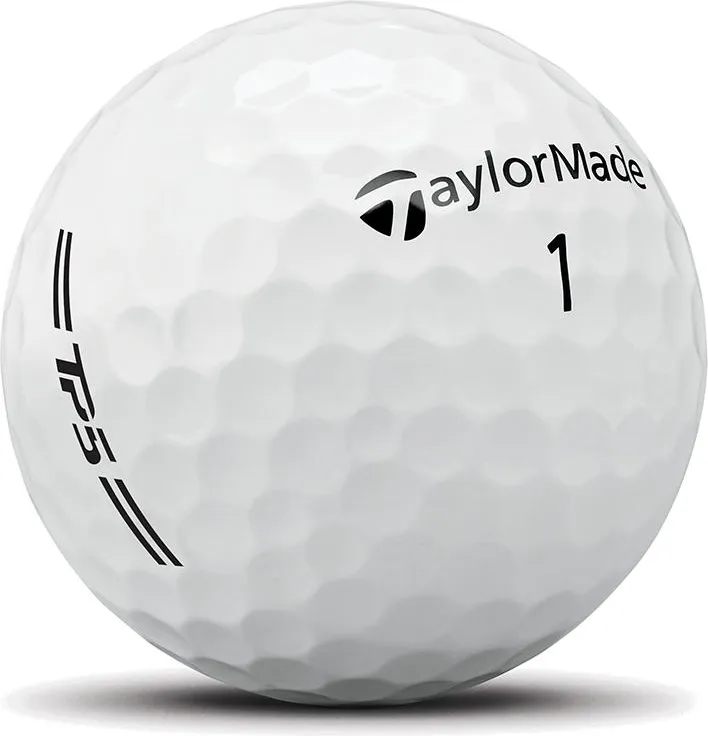
TaylorMade's five-layer tour ball with a cast urethane cover.
The cover: ionomer vs urethane
This is the real dividing line between cheap and expensive balls. Not the number of layers, not compression: the cover.
- Ionomer (often called Surlyn, DuPont's brand name) is a hard, tough plastic. It hardly scuffs, it's cheap, and it spins less. Most cheaper balls have an ionomer cover.
- Urethane is softer and grippier. Your wedge grooves bite into it, so it spins a lot more on short shots and stops on the green. It scuffs more easily and costs more to make. Tour balls use cast urethane, poured into the mold as a liquid. Cheaper urethane balls often use thermoplastic urethane, which is easier to make.
The MyGolfSpy 2026 ball test put a number on it. On a 35-yard wedge shot, urethane balls averaged about 1,250 rpm more spin than ionomer ones, the biggest cover-related difference in the whole test. On a wet full wedge shot, ionomer balls lost nearly a third of their spin, and urethane balls lost about a tenth.
On full shots the gap mostly disappears. Some firmer ionomer balls keep up with urethane off the driver and irons. The standout was the Titleist Tour Soft: ionomer, but it spun and flew like a urethane ball on full swings. Around the green, it still spun like an ionomer ball.
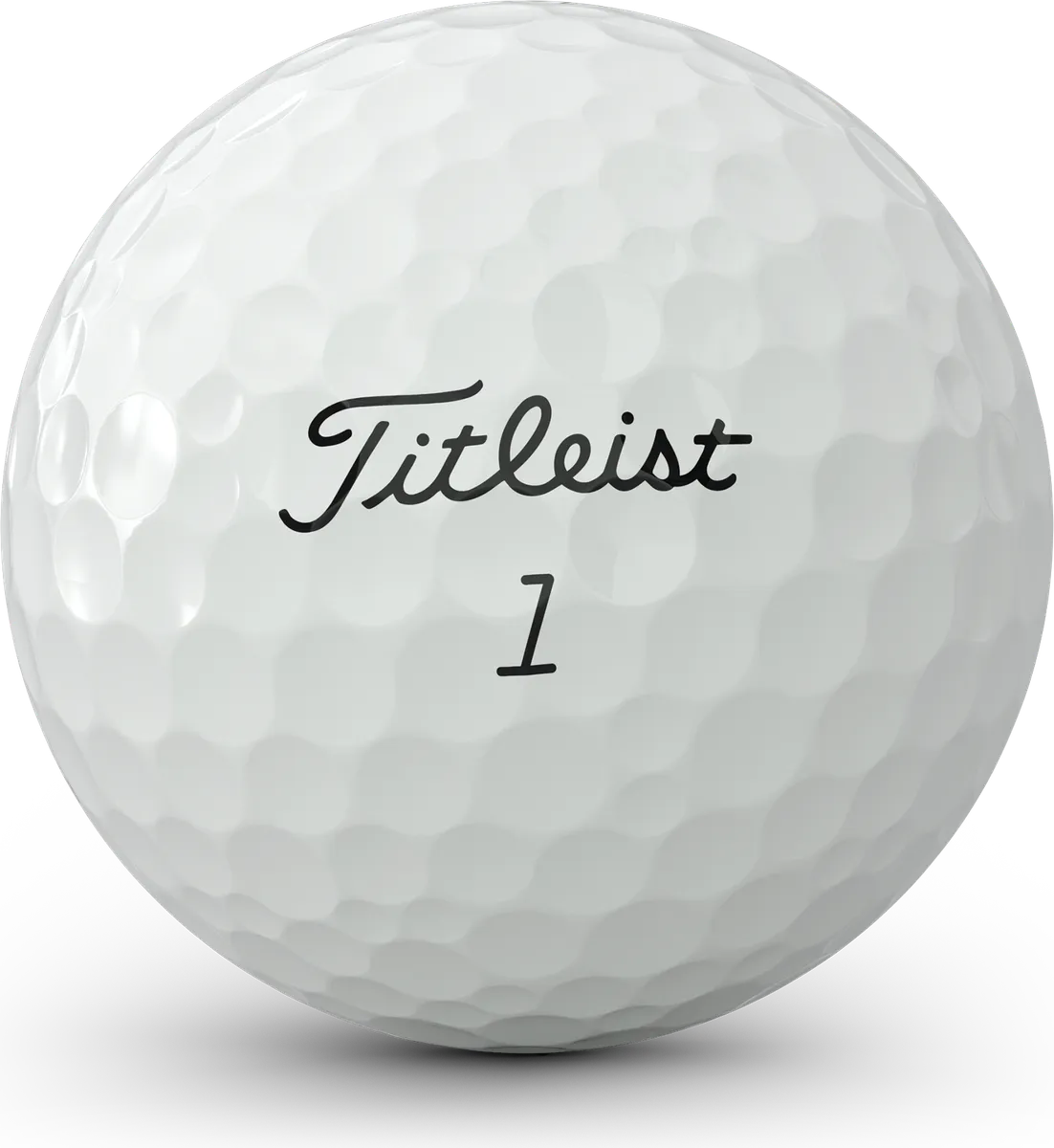
An ionomer ball that flew and spun most like urethane on full swings in the 2026 MyGolfSpy test.
Dimples
Why does a golf ball have 300-something little holes? A smooth ball would fly much shorter, by most estimates about half as far.
Air flowing around a smooth ball breaks away early and leaves a big, wide wake behind it, which pulls the ball back. Dimples make a thin layer of air right next to the ball turbulent, so the air hugs the ball longer and the wake gets much smaller. Less drag. Add backspin and the ball also gets lift, the same Magnus effect that bends a football free kick. That lift is what keeps a good drive in the air.
Remember the golfers in my history article who noticed that old, beaten-up gutties flew better than new smooth ones? That's this. The nicks were the first dimples.
Brands play with the number, shape and depth of dimples to tune how high the ball flies. The current Pro V1 has 388 dimples, the Pro V1x has 348. It's one more reason two balls with the same core and cover can fly differently.
The flower ball
Not long ago I found a ball online that looks like nothing else: Kaede, a Japanese ball covered in petal-shaped dimples instead of round ones. It had its moment of hype a while back. The name means Japanese maple, and the maker says the pattern comes from the maple leaf, though to me it looks more like flowers.
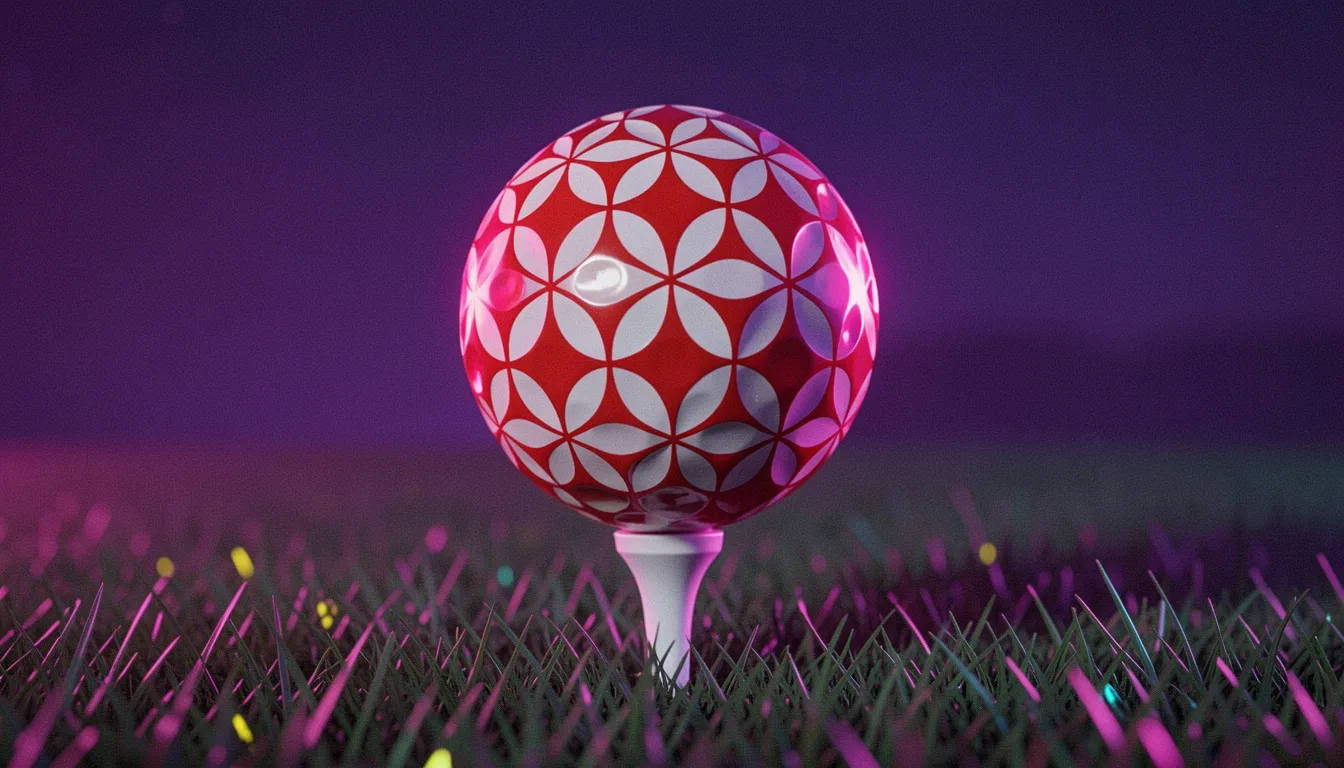
The claim: about 270 petal dimples that cut drag by 18% compared to normal dimples, so the ball flies higher and farther. Whether it's even legal is murky. Japanese sellers advertised it as approved by the R&A, the box reportedly says it conforms, but plenty of US sellers market it as an "illegal" distance ball, and it's not on the current USGA conforming list.
And when I read the reviews, they mostly said the same thing: a pretty average ball. Golf Sidekick tested it and didn't notice any real difference in distance, got a lower flight than usual, and found the dimples scuffed up easily. The one thing everybody agreed on is that it looks unique.
Which makes sense. Less drag doesn't mean 18% more distance, and if the ball is conforming, it's under the same distance limit as every other ball anyway.
Compression: soft vs hard
Compression is just a number for how much a ball squashes under a fixed load. A low number (40s–60s) is a soft ball, a high number (90s–100+) is a firm one. There's no single official gauge, so one brand's "70" isn't exactly another's, and many brands don't print a number at all. Some examples from MyGolfSpy's lab: the Callaway Supersoft measured 44, the Pro V1 92.5 and the Pro V1x 101.
Now, the famous advice: slow swing, soft ball. Your swing can't compress a hard ball, so you lose distance. Here's what the robots say.
MyGolfSpy's 2026 test hit 48 balls with a robot at three swing speeds, with a driver and a 7-iron. The slowest driver speed was 86 mph.
- Off the driver, soft is slow. At every speed. The 10 softest balls were slower than the 10 firmest, and the softest ball in the test, the Callaway Supersoft (the ball I play), was also the slowest. The "your swing is too slow to compress it" story would predict the opposite at low speed. It didn't happen.
- Off the 7-iron, it flipped. At the slow iron speed, the three softest balls were the three fastest. The Supersoft went from the slowest ball off the driver to among the fastest off the irons.
- The differences are small. At the slow driver speed, barely 11 yards covered all 48 balls, and 16 of them were in a statistical tie for the longest. Off the slow iron, the whole field was within 1.3 mph of ball speed.
- Spin mattered more than compression. The longest balls at low speed were mostly the low-spin ones, soft or firm.
Their own answer to "what's the right compression for my swing speed?" is, in short: there isn't one. Some slow swingers do better with a firmer, higher-spinning ball, some fast swingers like a soft low-spin one.
So what does a soft ball actually do? It feels and sounds softer, which is a real thing and a fine reason to pick it. It usually spins less off the driver, which can make a slice a bit less wild. That's about it. It doesn't magically add yards because your swing is slow.
And my swing is slow. The first time I measured my driver on the R10, it was around 60–70 mph. That's even slower than the robot's slowest test speed, so nobody has robot data for golfers like me. I've played both the Supersoft and the Pro V1 RCT, and I didn't notice any real difference. The Pro V1 seems to fly about the same, it just feels like hitting a rock.
One more surprise from the test: the TaylorMade Tour Response. It's a soft urethane ball, and it was among the longest at every speed with the 7-iron.
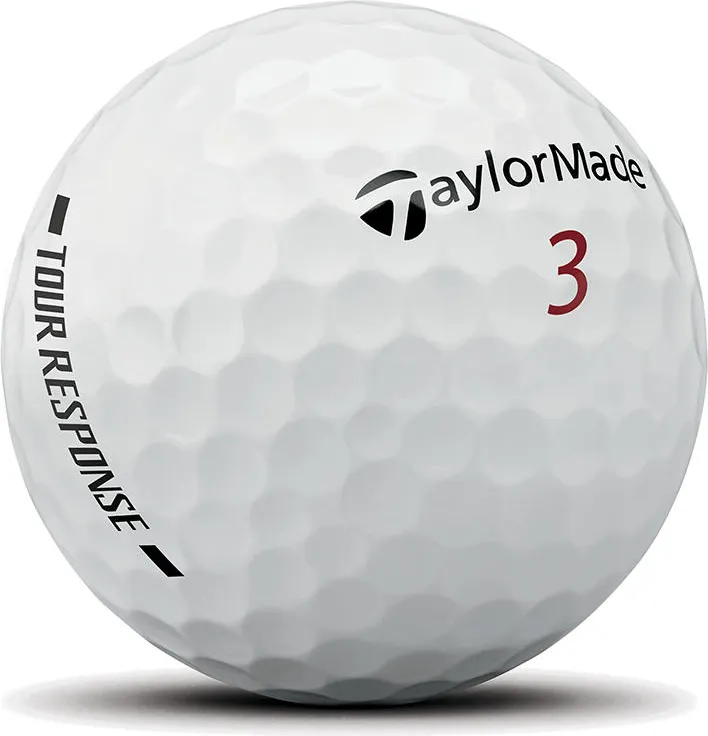
A softer urethane ball, among the longest off the 7-iron at every speed in the 2026 MyGolfSpy test.
Consistency: the cuckoo balls
Another thing I didn't expect: balls from the same box aren't always the same.
A ball whose core is off-center, or whose cover is thicker on one side, flies differently depending on how it sits on the tee. MyGolfSpy calls those cuckoo balls: a ball that keeps flying offline even when the robot makes the exact same perfect swing. Some brands are known for very consistent balls, others less so.
The good news: in their 2026 test, quality got better across the industry, and the share of really badly made balls roughly halved in five years. Cuckoos still exist though. And one detail I liked: they found that ionomer balls are often less consistent than top urethane ones, which can cancel out the "low spin = straighter" advantage on paper.
Who makes all these balls
The big brands are Titleist (Pro V1, Pro V1x, AVX, Tour Soft, Velocity, TruFeel), Callaway (Chrome Tour, Chrome Soft, Supersoft), TaylorMade (TP5, Tour Response, SpeedSoft), Bridgestone, Srixon, Wilson and Mizuno. Titleist makes its tour balls in its own factory in New Bedford, Massachusetts, a factory it opened because it couldn't make Pro V1s fast enough.
Then there are the direct-to-consumer brands like Vice, Snell and OnCore, and store brands like Costco's Kirkland Signature and Dick's Sporting Goods' Maxfli. Most of them don't own a factory. They design a ball and order it from a contract manufacturer, usually in Taiwan or South Korea.
The best story here is Kirkland. In October 2016 Costco started selling a 4-piece urethane ball, made in South Korea, for $29.99 for two dozen, about $1.25 a ball, when a Pro V1 cost $56 a dozen. Golf forums went crazy, and it sold out almost immediately. Then Titleist's parent company Acushnet sent Costco a letter claiming it infringed 11 patents. Costco sued first, asking a court to say it didn't, Acushnet countersued, and they settled in 2018. Kirkland balls are still around, now in white and yellow versions.
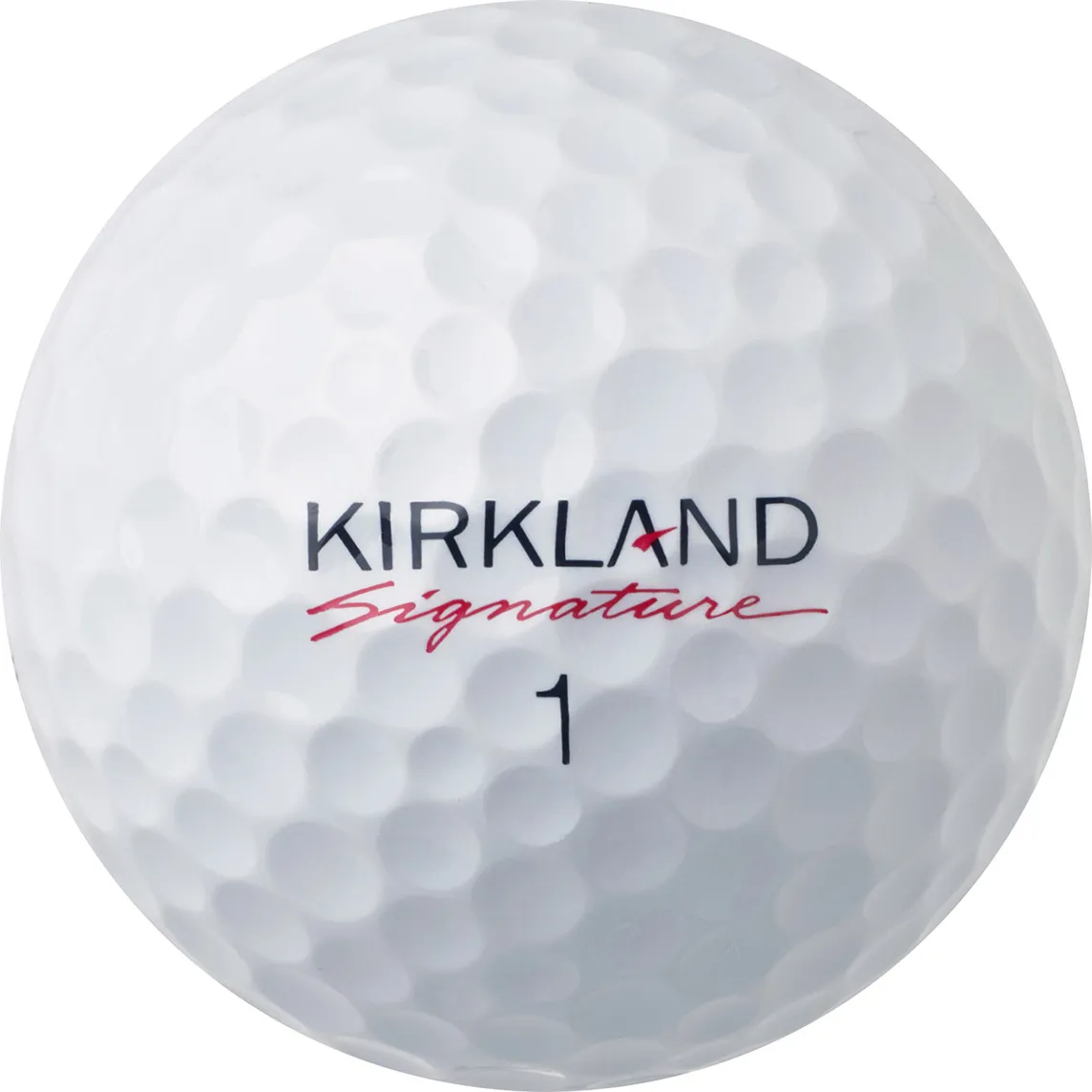
Costco's three-piece urethane ball, sold two dozen at a time.
Maxfli is a good example of a store brand that grew up. In the MyGolfSpy test the Maxfli Tour got the "Great Buy" pick at high swing speed, and its softer sibling, the Tour S, got it at low speed.
The ball words, in one table
| Term | What it means |
|---|---|
| Compression | How much the ball squashes under a load. Low = soft, high = firm |
| Ionomer / Surlyn | A tough, cheap, low-spin cover. Most budget and "soft distance" balls |
| Urethane | A softer, grippier cover that spins more around the green. Most "tour" balls |
| Core | The rubber center of the ball |
| Mantle | Layers between the core and the cover |
| 2-piece, 3-piece… | How many layers, counting core and cover |
| Tour ball | A premium multi-layer urethane ball, like the Pro V1, TP5 or Chrome Tour |
| Distance ball | Usually a 2-piece ionomer ball, low spin, built to roll out |
| "X" model | The firmer, usually higher-spinning version of a tour ball (Pro V1x, TP5x, Chrome Tour X) |
| Cuckoo ball | A badly made ball that flies offline even on a perfect swing |
| RCT | A Titleist marking that helps indoor radar launch monitors read spin. Same ball otherwise |
| Conforming | On the official list of balls that meet the rules |
What I play and why
After all this research, here's my conclusion as a beginner: most of the ball marketing doesn't matter for us yet.
The robot data says the differences in distance are a few yards. The difference that does matter, greenside spin from urethane, only helps if you can hit a decent chip. And here's the thing nobody tells you in the reviews: as a beginner, you lose a lot of balls. Believe me, I know. Even MyGolfSpy says that if you lose more than a couple of balls a round, a $50 dozen doesn't make much sense.
So I play the Callaway Supersoft. It's relatively cheap, and I like how it feels and sounds: really soft. Somebody first told me soft balls are better for beginners because of the slow swing. I now know that part was marketing, but I kept the ball anyway, for the price and the feel.
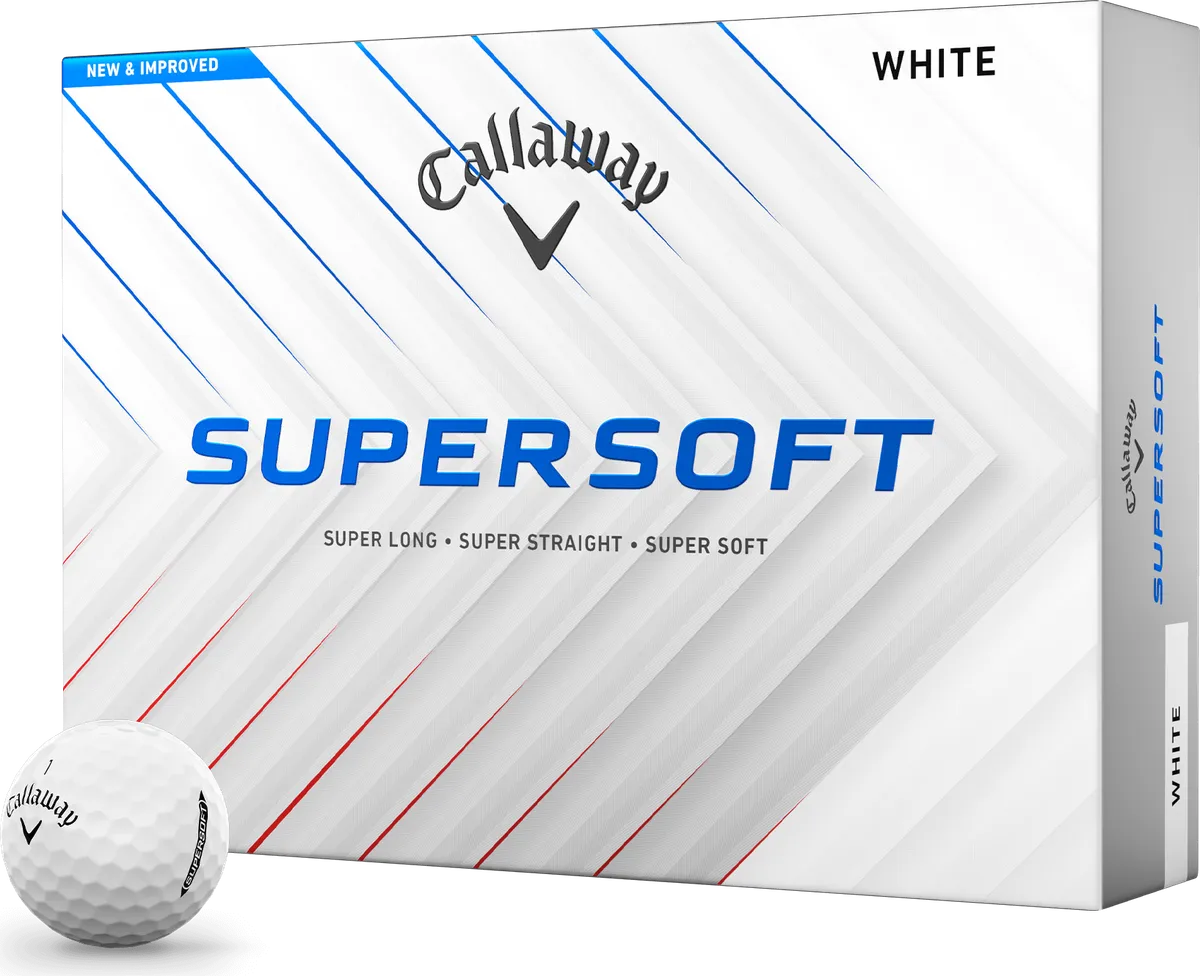
Two-piece ionomer ball with a very low compression: soft feel, low spin, low price.
I also have a box of Pro V1 RCT, but only for practice at home with my Garmin R10 launch monitor. RCT balls help the radar read the ball and spin indoors. Same distance for me, much firmer feel.
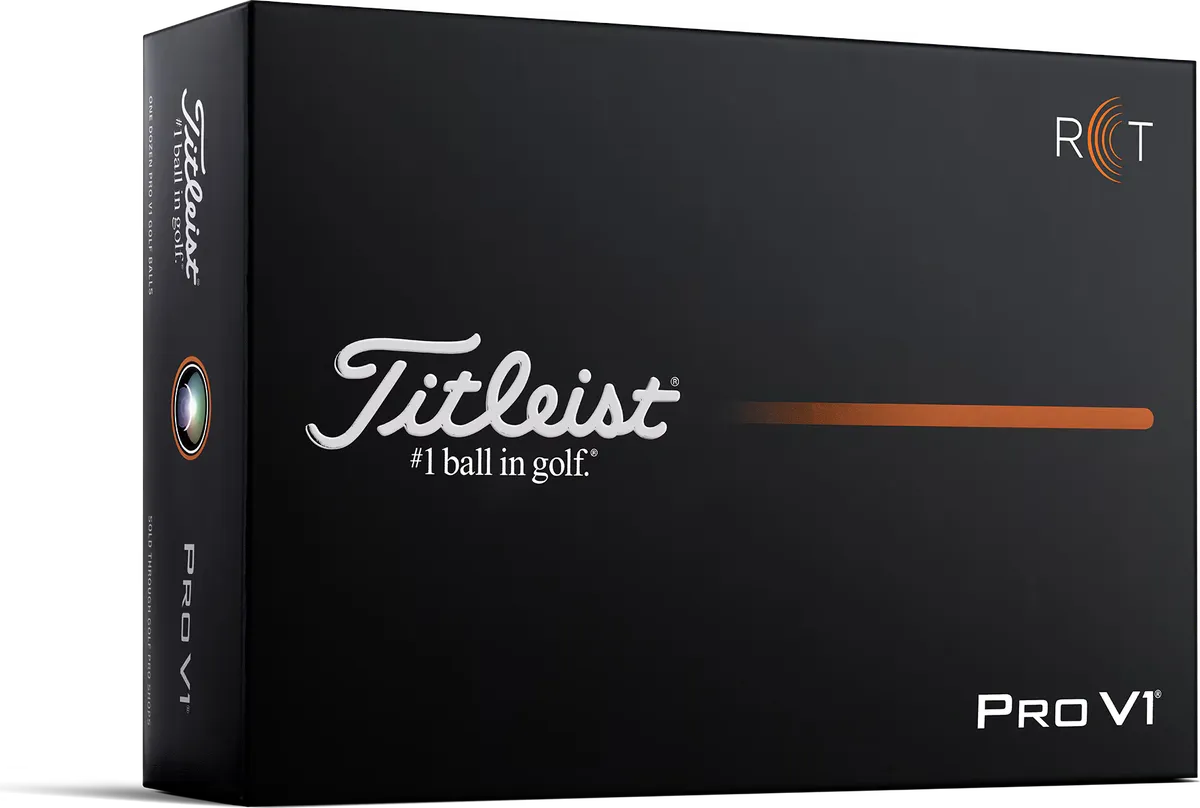
The Pro V1 with a marking that helps indoor radar launch monitors read spin.
When I can chip the ball close more often than not, I'll try a urethane ball on the course and see if the extra spin is worth it. Until then, the cheapest ball I like the feel of is the right ball. If you want to see what my clubs actually do with it, my carry distances are on the yardages page, and everything else I play with is on the gear page.